Root Canal Treatment
Cleaning out the inflamed nerve tissue and filling the canal — saving the tooth instead of extracting it.
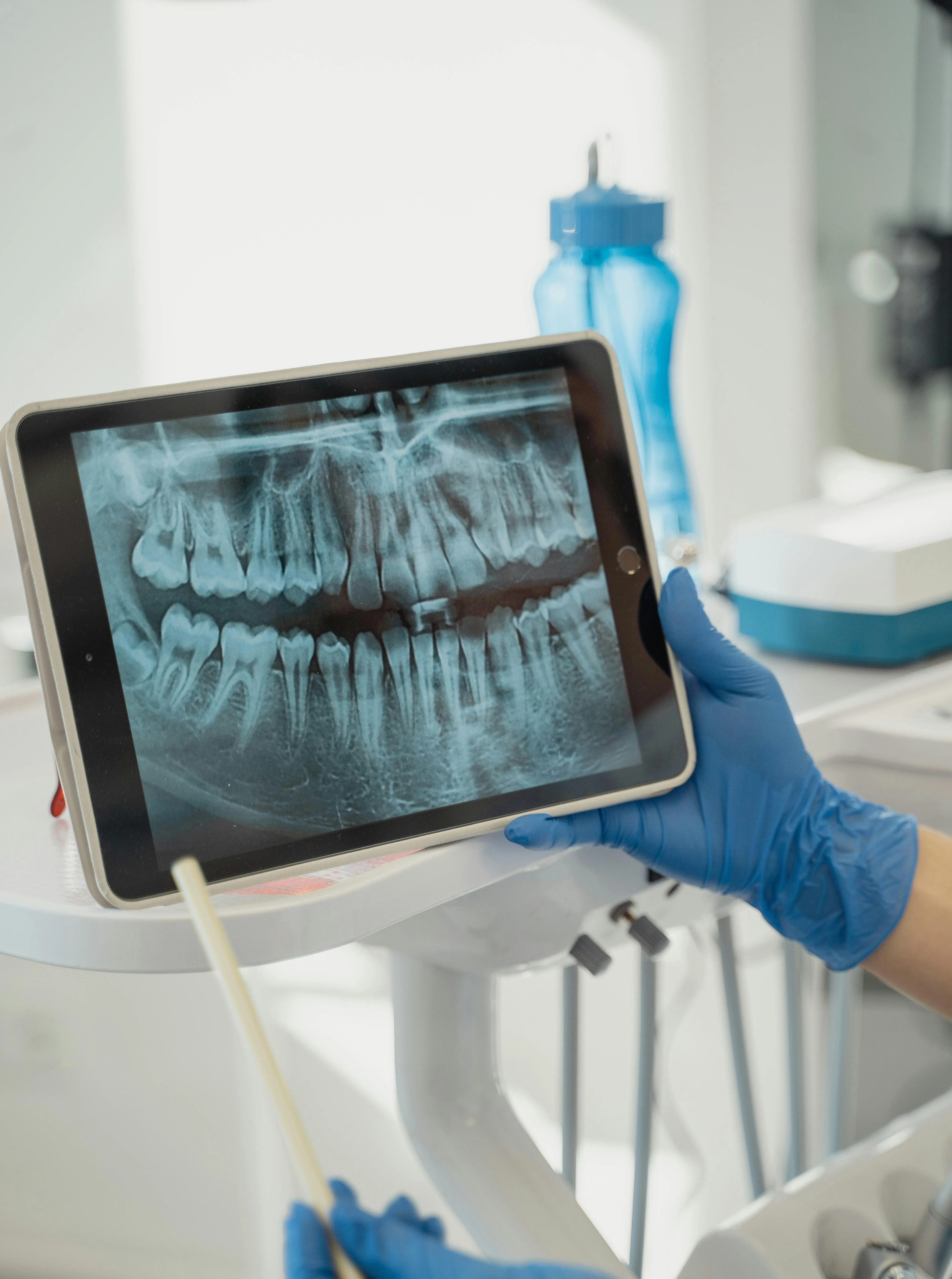
When decay passes through the enamel and dentine and reaches the living tissue at the centre of the tooth — the pulp — that tissue becomes inflamed. Root canal treatment cleans out this tissue, shapes the canal and fills it so that it does not leak.
The aim is to avoid extracting the tooth. Your own tooth is better than the best implant.
Does it hurt
No — this is the treatment most widely misunderstood.
Root canal treatment is the procedure that ends pain, not one that starts it. It is carried out under local anaesthesia; what is felt is close to having a filling placed. The pain a patient remembers is the pain of the inflammation that preceded the treatment.
There may be tenderness on chewing for a few days afterwards. A simple painkiller resolves it.
How it is recognised
- Pain that starts with hot or cold and does not subside for a long time
- Throbbing pain that increases on lying down at night
- Swelling of the gum, or a pimple-like bump
- Darkening of the tooth
Pain stopping does not mean the tooth has healed. When the nerve dies the pain stops as well; the inflammation continues quietly at the root tip.
Is a crown needed afterwards
Usually yes. A tooth that has had root canal treatment loses its blood supply and becomes brittle, and chewing forces are high on back teeth in particular. A root-treated tooth left without a crown may fracture within a few years.